
Commercial TPO Roofing Systems
Central Roofing is an expert TPO commercial roofing installer in Central Illinois, providing expert commercial roofing services since 2012!
- Get A Free Roof Inspection & Estimate
- Recommend A Roofing System That Meets Your Specific Needs
- Develop A Timeline That Aligns With Your Expectations
- Ensure That You Are Completely Satisfied With The Project
GET A FREE ROOF INSPECTION & ESTIMATE
RECOMMEND A ROOFING SYSTEM THAT MEETS YOUR SPECIFIC NEEDS
DEVELOP A TIMELINE THAT ALIGNS WITH YOUR EXPECTATIONS
ENSURE THAT YOU ARE COMPLETELY SATISFIED WITH THE PROJECT




TPO Commercial Roofing: Long-Lasting Roofs for Today’s Commercial Needs
TPO comes in a number of thicknesses for commercial properties: 45 mil, 60 mil, and 80 mil.
The 45 millimeter TPO is a great choice for a budget conscious roofing solution that doesn’t have high foot traffic or potential exposure to hail. The industry standard, 60 millimeter thick TPO is a great choice for most standard commercial buildings, schools, or malls. The next step up, 80 millimeter TPO roofing is an excellent roofing solution for multifamily homes, or apartment complexes that often house heavy HVAC equipment, and may have exposure to hail, heavy snow, or high winds. It also offers the highest puncture resistance.
Overall TPO is a great roofing choice for any commercial building owner who needs to balance cost and energy efficiency.
TPO Membrane Thickness
TPO is among the types of roofing membranes that have a single ply. This is an acronym which stands for the term Thermoplastic Polyolefin. The abbreviation is a way to state the roof membrane’s primary chemical which it is composed of.
There are a couple of primary categories that the NRCA or National Roofing Contractors Association define to be within the industry of the single ply. These are the thermoset membranes and the thermoplastic membranes. A part of the category of the thermoplastic membrane is the TPO.
When it comes to a lot of buyers, there may be minimal concern when it comes to the TPO roofing membrane and its chemical composition. However, there are a lot of buyers that are concerned about a single thing: they want to have their buildings kept dry through the installation of a roof system that is capable of performing wonderfully for a significant amount of time.
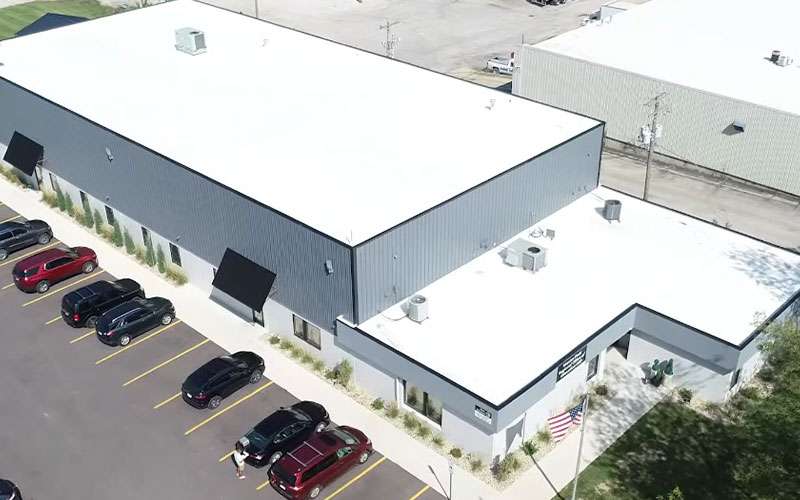
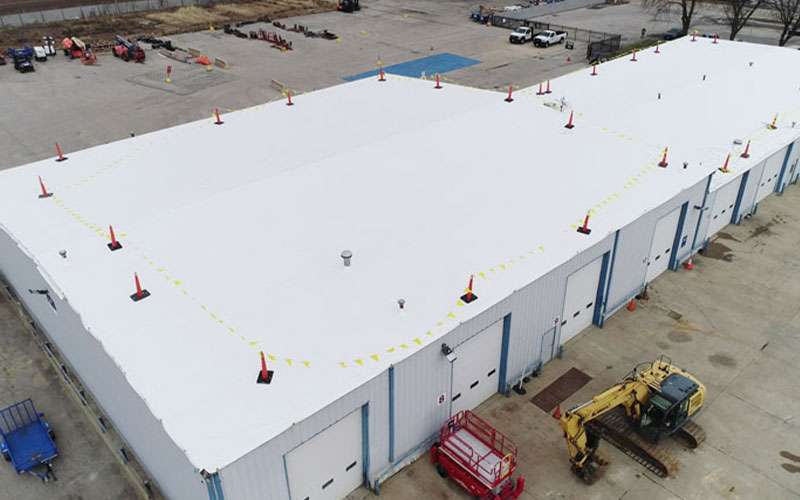
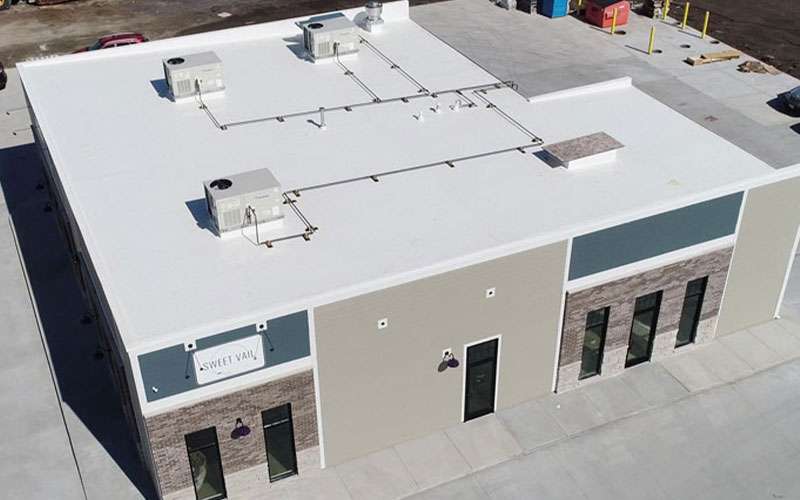
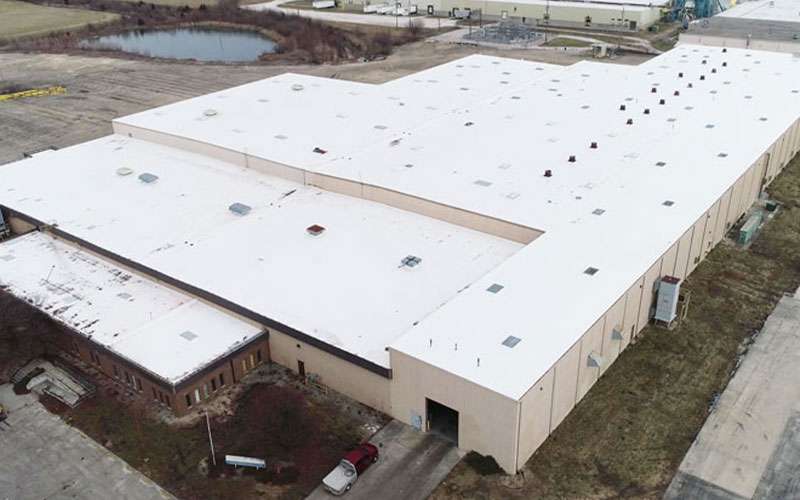
We Use Top Quality TPO Materials On Every Project!
Methods Of Installing A Commercial TPO Flat Roofing System
Mechanically Attached System
Fully Adhered System
Ballasted System
Advantages Of TPO Commercial Flat Roofing
TPO roofs are typically white or light-colored, reflecting sunlight and reducing heat absorption. This can lower cooling costs, especially in warmer climates or during Illinois summers.
TPO is generally less expensive to install compared to other single-ply systems like PVC, while still offering solid performance.
TPO stands up well to UV rays, ozone exposure, and temperature swings, which is ideal for Illinois’ mix of hot summers and cold, snowy winters.
TPO can be mechanically fastened, fully adhered with adhesive, or ballasted, giving contractors flexibility based on the building’s needs.
With proper installation and maintenance, TPO roofs can last 15-30 years, offering a solid return on investment.
TPO is lighter than multi-layer systems like built-up roofing (BUR), making it easier on a building’s framework and suitable for a variety of structures.
OUR REVIEWS
Thousands Of Illinois Commercial Roofing Projects Completed!






The quality of the work was excellent, and they kept everything clean and organized while they worked. It’s refreshing to deal with people who actually take pride in what they do. I would definitely recommend Tyler Orr, Brayden, and the entire team to anyone needing roofing work. Great experience all around!


